Without spark plugs, some vehicles can't start — or go anywhere. The health of these parts is directly linked to engine performance, so bad spark plugs can often lead to more significant problems, including prolonged cold-starting and misfires during acceleration.
Without healthy plugs, your vehicle may not reach its maximum potential, and its fuel economy can suffer. Nobody wants that. Read on to learn all about spark plugs, including what they do, signs they need to be replaced, how frequently to change them, and more.
Key Overviews:
- Spark plugs are electrical components that ignite the air-fuel mixture in internal combustion engines, making them essential for starting your vehicle and ensuring smooth, efficient combustion.
- Common signs that your spark plugs need replacement include rough idling, engine misfires, hard starts, reduced fuel economy, and sluggish acceleration.
- Most spark plugs should be replaced every 30,000 to 100,000 miles, depending on the type of plug and the manufacturer's recommendations.
- Installing new spark plugs can improve engine performance, restore fuel efficiency, reduce emissions, and lead to smoother, more reliable starts.
How to Tell If a Spark Plug Is Bad
Before we dive into “Spark Plug 101,” let’s answer your burning (or maybe not so burning) questions: are your spark plugs bad, and how can you tell if they are?
Spark plugs can fail for several reasons, most commonly due to age, wear, and issues with the electrical/ignition system. Abnormal (knocking) combustion, contamination, or overheating can lead to the inability to spark the air-fuel mixture.
Since spark plugs play a vital role in powering your vehicle, it's not surprising that the signs of faulty plugs are pretty jarring. A few common symptoms you may notice include:
- Check engine light: When spark plugs fail, the check engine light may illuminate.
- Rattling, pinging, or "knock"-like noises: If a spark plug fires at the wrong time, it could lead to rattling, pinging, or engine knocking sounds.
- Hard vehicle start: If your car has trouble starting or feels disjointed and jerky, your spark plugs may need to be replaced.
- Reduced performance: When you're out cruising, your spark plugs don't take a break, even when you accelerate and change gears. If the spark that this little plug generates isn't functioning at 100 percent, your vehicle can’t perform its best.
- Poor gas mileage: Many factors can lead to poor fuel economy. Faulty spark plugs may waste fuel if your vehicle doesn’t receive the proper spark at the right time.
If you've noticed any of these symptoms, we recommend scheduling an appointment to diagnose the problem and prevent further complications. Healthy spark plugs are vital to your car's ability to start up and remain powered.
Spark Plug 101:
What Are Spark Plugs?
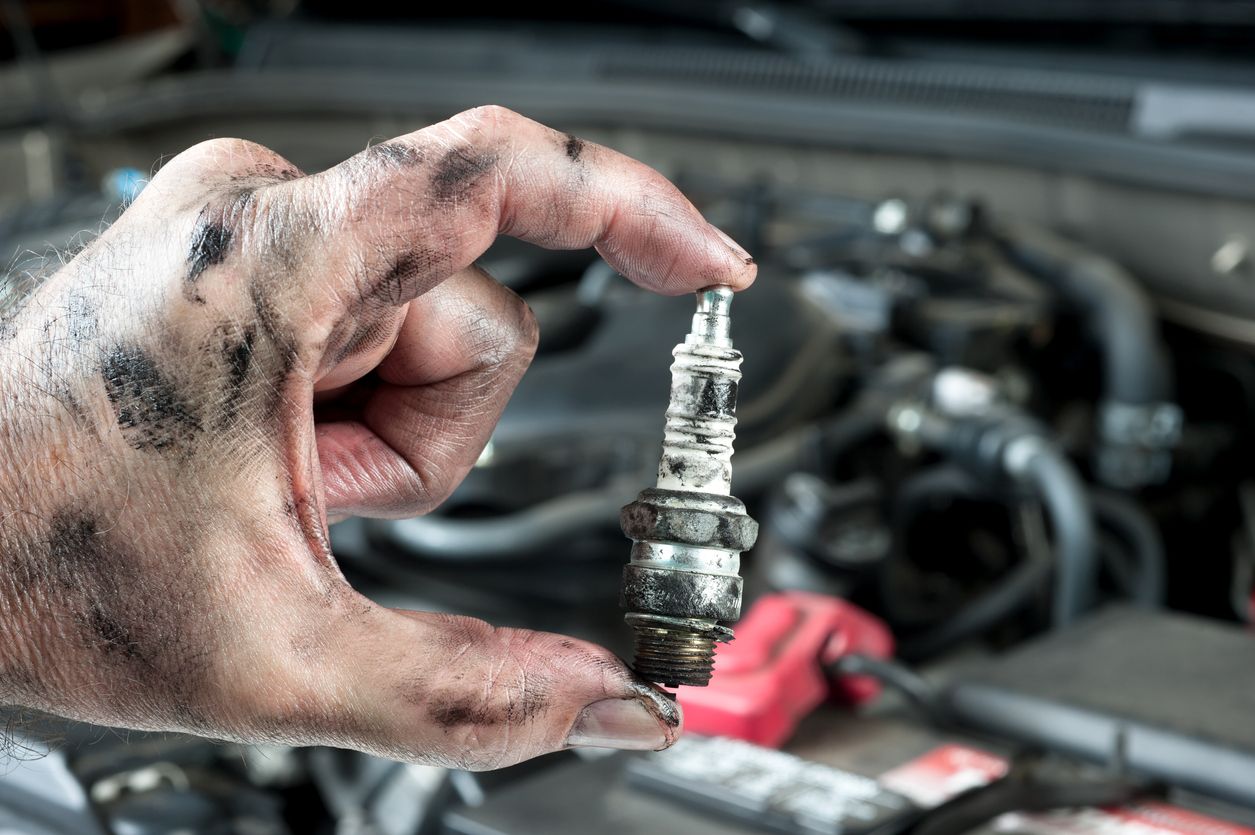
Spark plugs are electrical devices responsible for igniting the air-fuel mixture within your engine's cylinders. Your vehicle depends on these components to kickstart the combustion process.
Where Are Spark Plugs Located?
Spark plugs are generally located at the top of the cylinder head(s) in your engine. Each cylinder typically has at least one spark plug.
What Do Spark Plugs Do, and How Do They Work?
As the name suggests, spark plugs create a spark to ignite an air-fuel mixture within your engine. This combustion generates the energy needed to power your car’s pistons and get you to your next destination. They also help dissipate heat from the combustion chamber to the car engine's cooling system. Here's an overview of the process:
- You Turn the Key in the Ignition: When you start your car by pushing the "ignition button" or inserting and turning your key, the starter motor engages, which cranks your engine.
- Energy from the Battery Ignites the Plugs: Electricity from the battery travels to an induction coil on your car's combustion engine. The battery's 12 volts are transformed to as much as 45,000 volts or more before being supplied to the spark plugs.
- Sparks Fly: As the induction coil's voltage increases and is transferred to the spark plugs, the plugs ignite the air-fuel mixture inside the combustion chamber. This process generates a small, controlled electric arc between the electrodes of the plugs.
- Combustion Powers Your Vehicle: Once the air-fuel mixture ignites, a chemical reaction occurs, transforming the mixture into an expanded gas, known as “exhaust.” The pressure generated by this sudden expansion within the combustion chamber moves your car's pistons, ultimately turning chemical energy into the kinetic energy required to power the engine.
- The Cycle Continues: As you continue your journey, the spark plugs power through this cycle repeatedly, helping your car run smoothly until you reach your destination.
How Often to Change Spark Plugs
How long do spark plugs last? Most auto manufacturers recommend replacing spark plugs at least every 100,000 miles. However, your spark plug’s lifespan may vary based on engine, condition, and spark plug type — some engines and plug types require replacement as frequently as every 30,000 miles. Ultimately, the maintenance schedule recommendations in your owner’s manual may call for more or less frequent replacements depending on make, model, and year.
Spark Plug FAQs
Why Should You Replace Your Spark Plugs?
The primary benefit is knowing your car will fire up without a hitch, but new spark plugs can provide a lot of other performance benefits, such as:
- Consistent optimal combustion: Fully functioning spark plugs help keep your engine running smoothly. With a set of good plugs, many of your performance issues could be a distant memory.
- Better fuel economy: Worn, misfiring spark plugs can reduce your gas mileage. When replaced at the recommended intervals, new plugs can help maximize fuel economy and save some dough.
- Smooth and energetic starts: The first time you turn the ignition with new spark plugs can be an eye-opening experience. The old ones may have been the reason your car was experiencing those jerky starts.
- Reduced harmful emissions: The Environmental Protection Agency states that diligent car care — especially regarding spark plugs — can help increase fuel efficiency and reduce air pollution. That's a win-win.
How Much Does It Cost to Replace Spark Plugs?
While spark plugs typically cost between $5 and $25 each, the total cost, including labor, is generally higher.
Spark plug replacement can be straightforward or complex, depending on the vehicle. As a result, most shops charge between $100 and $250, based on your vehicle’s make, model, and the type of plugs it requires. However, some engines require multiple spark plugs per cylinder, which increases component cost. Additionally, labor time can vary, as some engines are more complex and may require minor disassembly to remove the spark plugs.
Regardless of the circumstances, parts must be cool before they can be worked on, and the time it takes to complete the service varies. So, plan ahead—vehicle drop-off is usually recommended.
Can I Replace Spark Plugs Myself?
It is possible for an experienced DIYer to replace spark plugs on their own. However, many modern vehicles require specialized tools (such as spark plug sockets), specific torque specifications, and careful handling to avoid engine damage. Missteps — such as cross-threading, using the wrong plug, or damaging an engine component — can lead to costly repairs.
For safety and reliability, we recommend having our professional technicians handle the replacement to ensure everything is installed to the manufacturer's standards.
Are Spark Plugs Universal?
No, although some auto parts stores may lead you to believe otherwise, not all spark plugs are created equal. At Firestone Complete Auto Care, we use top-quality spark plugs that meet or exceed OEM specifications, which may help your car perform better for longer.
You generally have three options for spark plugs: copper, platinum, and iridium.
- Copper spark plugs are often the standard and feature a copper core with nickel alloy fused to the electrodes. These plugs generally last about 20,000 miles.
- Platinum spark plugs have a platinum disk fused to the electrode. Platinum has a higher melting point and can better withstand heat, so these plugs can last up to about 100,000 miles.
- Iridium spark plugs feature a fine wire-centered electrode, which conducts electricity more efficiently. They are considered the highest-quality spark plugs and are known to last the longest.
Schedule a Spark Plug Replacement Service Today
If your car is showing signs of worn spark plugs — or it’s simply time for routine maintenance — our expert technicians are here to help. Schedule an appointment with your local Firestone Complete Auto Care, and we’ll perform a thorough inspection and install high-quality spark plugs if needed. Enjoy reliable performance and a cleaner, stronger spark every time you drive.