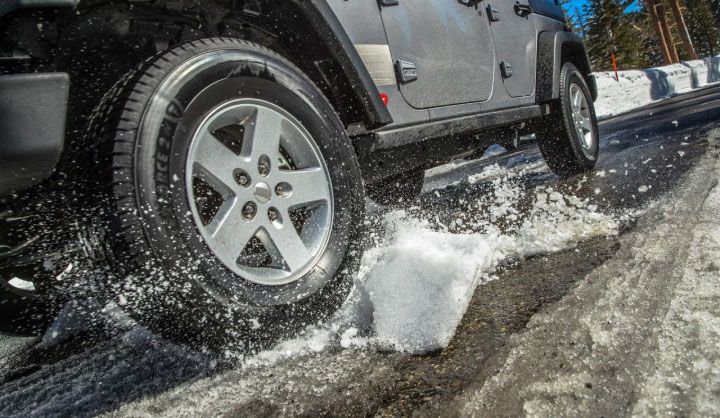
If you drive an all-wheel drive (AWD) vehicle, you may wonder, “Do I need winter tires with AWD?” That's a fair question. AWD is often marked as a traction cure-all, but that isn’t the full story. The truth is, traction control and torque distribution are only part of the equation. If your tires can’t grip cold pavement, the rest doesn’t really matter. That’s why swapping to a pair of good winter tires is a key element of cold-weather performance.
Read on to learn about the science behind winter tires, why pairing them with AWD is one of the best things you can do for winter safety, and which winter tires you should choose for your vehicle.
Winter Tires vs. AWD: What Each Really Does
Let’s set the record straight. AWD and winter tires are not mutually exclusive. In fact, they’re better when combined. Your AWD system sends power to all four wheels. That helps prevent wheelspin when you accelerate, especially in slick conditions, which makes it one of the better drivetrain choices for winter weather. But AWD doesn’t help you stop faster or corner more securely on snow and ice. That’s your tires' job.
Winter tires are engineered with unique rubber compounds that remain flexible as temperatures drop. The tread blocks tend to be deeper, and the sipes — those tiny grooves across the tread — act like claws on packed snow. Both of these features help maintain grip where summer or all-season tires would start to stiffen and slide.
In short, AWD helps you get moving in slippery conditions. Winter tires help you stop and steer safely once you’re moving—and in winter driving, those two are what keep you safe and on the road.
Why Do AWD Cars Need Winter Tires?
Why do all-wheel drive cars need winter tires? If your winter brings freezing temperatures, slush, or snow, the answer is simple — winter tires aren’t about getting unstuck; they’re about not losing control in the first place.
Imagine this scenario: you’re approaching a stoplight on a frozen morning. The car in front of you has snow tires and stops smoothly. You have AWD but no winter tires — you keep sliding because your rubber has hardened in the cold. That’s the difference between control and chaos.
Ultimately, AWD systems are great at reducing wheelspin and maintaining forward motion. But when you hit the brakes on a slick surface, all four wheels lock up just like any other car if the tires can’t grab. That’s why even the best AWD vehicles can feel helpless on snowy and icy roads with all-season tires.
The Science Behind Winter Tires
The rubber compounds used in good winter tires are designed to stay soft and pliable as the temperature drops. That flexibility ensures the tread maintains maximum contact with the road’s surface, biting into microscopic imperfections instead of skating over them.
Winter tires also feature unique tread patterns, with wide channels that move slush and water out of the way and help prevent hydroplaning, as well as dense siping to enhance grip on icy surfaces. Compared to an all-season tire, a winter tire’s ability to generate traction in cold conditions is night and day. That’s why even front-wheel drive (FWD) vehicles or rear-wheel drive (RWD) vehicles with proper snow tires can outperform AWD systems running standard rubber in deep winter. The physics don’t lie (and the experts at Consumer Reports don’t, either).
The Best of Both Worlds: Combining AWD and Winter Tires
Every drivetrain has limits, and winter tires extend those limits. Pairing AWD with winter tires provides the ideal setup — power to all four wheels and rubber that actually grips in freezing weather. The traction gains you can get from winter tires alone are dramatic: better cornering, shorter stopping distances, and smoother launches when the roads are coated in snow or ice. Pair that with the innate benefits of AWD or 4WD vehicles, and winter roads have met their match.
Finding the Best AWD Winter Tires, and When to Install Them
Now that you know all-wheel drive vehicles need winter tires, when should you invest in winter tires, and how do you pick the right ones for your ride?
When to Install Winter Tires on Your AWD
Don’t wait for the forecast to turn ugly. Winter tires are best installed before you’re driving in snow, not after you’re already sliding around. Tires perform differently even on dry pavement once temps dip to near freezing, so “Let’s wait until it snows,” isn’t the mindset we’d recommend.
Where to Find AWD Winter Tires
Firestone Complete Auto Care offers a wide selection of tires to meet your needs—from versatile all-weather options that handle whatever Mother Nature throws your way to specialized winter tires like the studdable Firestone Winterforce 2.
But if you’re looking for some of the best winter tires for your vehicle, one of our top recommendations—the Bridgestone Blizzak DM-V2—delivers exceptional grip and control in snow and ice. Whether you drive a light truck, SUV, CUV, or a passenger car, we’ve got you covered.
Here are some of the advanced technologies and benefits that make Blizzak tires stand out:
- The Latest Proprietary Multicell™ Compound, which removes water from the surface of the tire for solid braking on ice.
- An Optimized Contact Patch that allows the surface of the tire to touch the ground to help give you control in winter conditions.
- Aggressive Block Edges help the tire bite into the snow.
- Advanced Hydrophilic properties that provide confident stopping power on snow and ice.
The benefits don’t end with the tire itself, either; at Firestone Complete Auto Care, we believe in value. That’s why we frequently have sales and deals on tires tailored to the season.
Need AWD Winter Tires? Firestone Complete Auto Care Has What You Need
Think your AWD system has winter covered? Think again. To get real control in cold, icy conditions, winter tires are a must, even for AWD vehicles. Visit your nearest Firestone Complete Auto Care to find the best winter tires for your car and get them installed by the pros. Plus, with our Priced Right Guarantee, you can ensure that you are getting the best price on quality tires. Schedule your appointment today before the weather turns.