A dead battery has a way of stopping your day in its tracks. Whether your vehicle won’t start in the driveway or leaves you stranded in a parking lot, you're likely wondering how to charge your car battery properly. The answer depends on how discharged it is, why it died, and whether the battery still holds a charge.
Keep reading; we’ll explain the best methods for recharging based on your situation. We'll also help you figure out what to do next, and when it’s time to have your charging system professionally tested.
Key Takeaways
- After jumpstarting a dead car battery, you may be able to charge it by idling (depending on the health of your charging system).
- Alternators typically produce more power at higher engine speeds, making driving a more effective way of charging your battery than idling.
- A mildly drained battery may recover in 30 minutes, but a deeply discharged battery might need a battery charger.
- If your battery repeatedly dies, it’s time to bring your vehicle to a professional for battery, alternator, and charging system diagnostics.
The Two Main Ways to Recharge Your Car Battery:
1. Jump-Start the Engine and Let the Alternator Do the Work
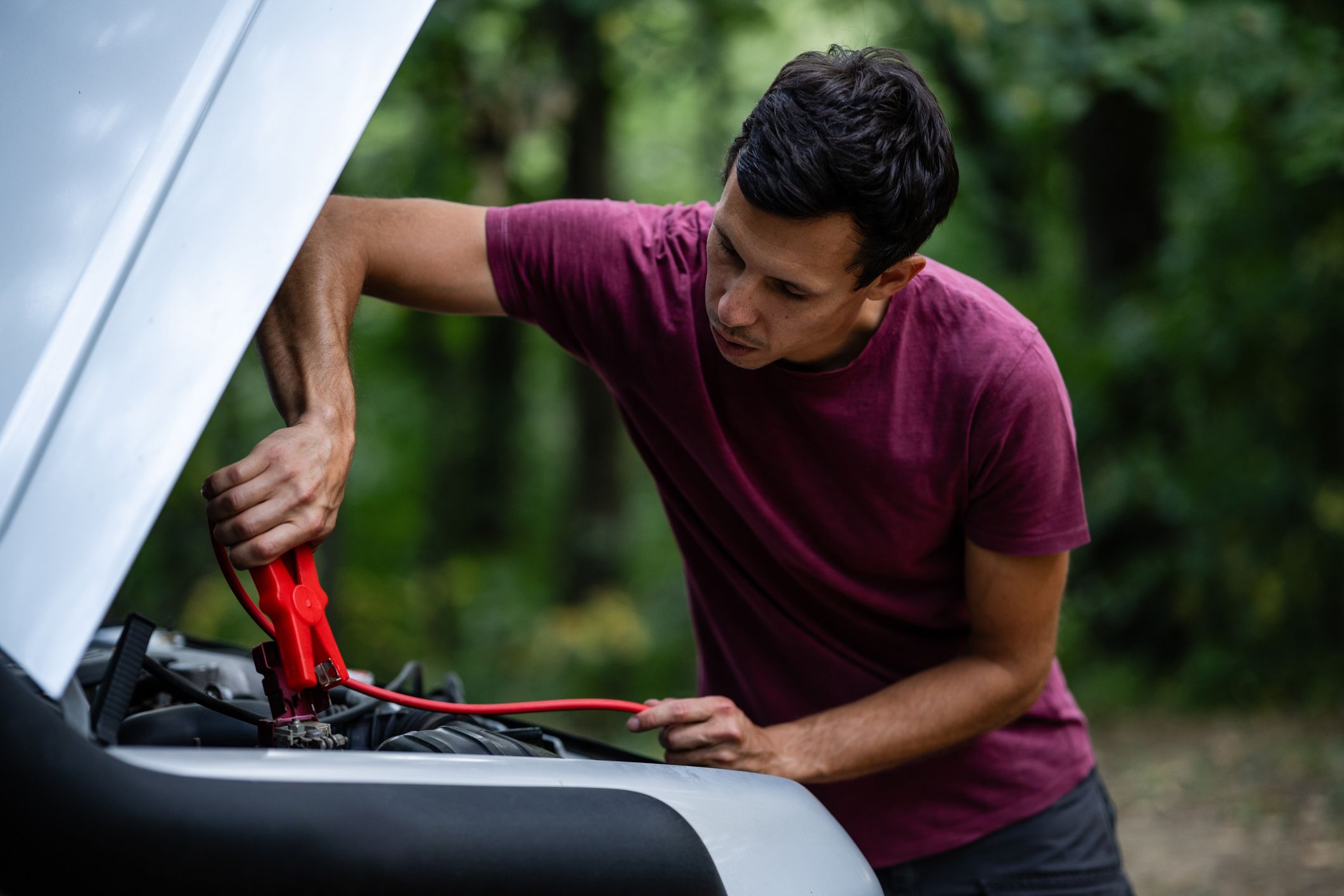
If your battery has enough life to accept a charge, this is often the fastest way to get moving again. After using jumper cables to start your car, you can let it keep running to give your alternator a chance to recharge the battery. While this shouldn’t be done very often, since it can put extra stress on your alternator, it can be a good choice when:
- You have access to another vehicle with a good battery.
- Your battery is only mildly discharged.
- You don’t have access to a battery charger.
With that said, how well this method works really depends on your battery’s condition, your alternator’s output, the electrical demand on your vehicle, and whether you idle or drive to charge. (We’ll explain this further in our FAQ section below.)
2. Use a Battery Charger
If your battery is deeply drained or your vehicle won’t start after running for a while, using a dedicated battery charger is often the better option. Unlike an alternator, a charger is specifically designed to maintain or charge a depleted car battery back to full capacity. There are three main types of car battery chargers:
- Booster Chargers (Several hundred amps): Also called fast chargers, these deliver a high burst of power to quickly revive a low battery. They’re useful when you need to get back on the road fast, but because they charge aggressively, they can be harsh on battery longevity. As such, they’re better suited to short-term recovery than to routine battery maintenance.
- Standard Chargers (5–15 amps): These charge fairly quickly and are perfect for restoring a low battery that still has life left. Some chargers of this type have smart features that prevent overcharging and can desulfate your battery after it’s been severely depleted or stored improperly. These features can potentially help maximize the life of a battery that has been temporarily discharged.
- Trickle Chargers (0.5–2 amps): These charge slowly and steadily, making them ideal for battery maintenance. Most trickle chargers won’t charge a dead battery. Instead, they’re meant to be used on seasonal or collector vehicles to help keep the battery maintained without overcharging.
Using a battery charger to recharge your battery is the best option when:
- Your battery is deeply discharged.
- Your vehicle won’t start after running for a while.
- The battery has sat unused for weeks or months.
- You want to maintain battery health during long-term storage.
Battery Charging FAQs:
Why Does My Car Battery Keep Dying?
Most battery failures aren’t random. Instead, they usually boil down to four main causes:
- Aging Batteries: Most batteries reach the end of their life within three to five years.
- Short Trips: Frequent short drives can drain more power during startup than the alternator can replace during your trip.
- Extreme Temperatures: Heat accelerates internal battery wear, and cold weather reduces available starting power. Both are hard on your battery.
- Electrical Drains: A dome light, headlights, or a charging cable left plugged in can create a dead car battery overnight.
While the culprits above are most common, repeated battery failures often point to a bigger issue, such as a failing alternator, damaged wiring, or a charging system that needs professional help.
Does a Car Battery Recharge Itself?
While your battery doesn’t recharge itself, it can certainly feel that way. As your engine turns, the alternator generates electricity to power the vehicle and help recharge the battery. So while the battery itself isn’t self-healing, the vehicle’s charging system does restore power automatically.
However, this can only happen if your battery can accept a charge, the alternator is healthy, and the rest of the charging system is functioning properly. If any part of the system fails, your battery likely won’t recover its charge.
Does the Alternator Charge the Battery While Idling?
If you’ve just jump-started your car, it can be a bit nerve-wracking to get back on the road immediately. It’s natural to want to wait for it to recharge a bit first so that you don’t break down while driving and end up in a dangerous situation. But is that a viable course of action? Will a car battery charge at idle?
The answer is… kind of. Providing that your charging system is healthy, your alternator can recharge your battery at idle. However, it may not be the “best” way to charge a car battery. At idle, most alternators only generate a bit more power than is necessary to keep the engine running without depleting the battery. It’s only at higher RPMs (like when you’re driving at highway speeds) that your alternator really starts generating the power necessary to charge a battery.
In short: Do you have to drive to charge a car battery? No, but it’s often the better route.
How Long to Run a Car After a Dead Battery Occurs?
A good rule of thumb is to let your vehicle run for at least 20-30 minutes after a jump start, but that’s only a starting point. How long it actually takes depends on how drained the battery was, how healthy it is, and whether your charging system is working properly. A battery that was accidentally drained (e.g., you left your headlights on) may recover fairly quickly. An older battery or one that’s been deeply discharged may need significantly more time — or may not recover at all.
And as we mentioned earlier, driving is more effective than idling. And if you’re letting the car idle, you may be looking at 60 minutes or more before you even see a partial charge—and if your battery was completely dead, idling may never bring it back to a full charge. If you’re driving, you’ll likely see noticeable improvements closer to the 30-minute mark.
How Long Does It Take a Car Battery to Charge on a Charger?
Charging time depends on the type of charger you’re using and how deeply your battery was discharged. Regardless of your charger type, we highly recommend double-checking the user manual, since overcharging or charging too rapidly can seriously damage your battery.
- Booster Charger: A few minutes, depending on the amperage setting and type of booster you have. (Boosters are designed to help start a car, but not designed to charge weak batteries over time.)
- Standard Charger: At 5–15 amps, you’re looking at 3–12 hours, depending on your battery’s health and remaining charge.
- Trickle Charger: At 0.5–2 amps, this charger should take about 24–48 hours to charge your battery.
One more thing to note: if a battery is aged or damaged internally, even the best chargers may not be able to restore it. Sometimes a battery simply reaches the point where replacement is the smarter move.
Got Battery Issues? Firestone Complete Auto Care Can Help.
If your battery frequently needs a jump-start or struggles to hold a charge, it may be time to evaluate your battery and charging system. Firestone Complete Auto Care offers battery testing and inspections to help determine whether the battery, alternator, or related components are affecting reliable starts. Schedule an appointment online or stop by your nearest location today!
--
Article Development Supported & Reviewed By:
Firestone Complete Auto Care’s Technical Operations Team
The Firestone Complete Auto Care’s Technical Operations Team is composed of ASE certified technicians with over 70 years of combined experience. ASE certification represents the highest standard of technical training in the automotive industry. Guided by Firestone Complete Auto Care’s rigorous editorial standards, our team delivers timely, detailed, and practical resources drivers can trust to keep their vehicles running newer, longer.