Your brakes are one of the systems where “close enough” isn’t good enough. When something is off, the margin for error shrinks fast. Problems that start small can quickly affect control, stopping distance, and overall confidence behind the wheel.
If you think you might have a sticking or seized brake caliper but aren’t sure, it's time to take action. This issue often flies under the radar until it starts impacting the rest of the braking system.
Keep reading to learn about the signs of a bad brake caliper, how to tell if yours are sticking, and what to do if they are.
Key Takeaways
- Symptoms: Steering pull to one side while driving or during braking, a burning smell, uneven brake pad wear, reduced braking power, or a soft brake pedal
- Common Causes: Corroded hardware, a collapsed brake hose, contaminated brake fluid, a seizing caliper piston, or a stuck parking brake.
- Why It Matters: A sticking or seized caliper compromises performance and safety, causes heat buildup, and accelerates pad wear.
- Best Solution: A professional inspection to determine whether cleaning, lubrication, servicing, or replacement is required.
- Next Steps: Take advantage of Firestone Auto Care’s free brake checks and coupons on professional brake services.
SCHEDULE A FREE BRAKE INSPECTION
How to Tell If a Brake Caliper Is Seized or Sticking
When your caliper sticks — whether intermittently or because it’s permanently seized — the brake pad stays clamped against the rotor even when you’re not braking. That constant friction leads to rapid pad wear, excessive heat buildup, and reduced braking on that corner of the vehicle. Over time, it compromises both stopping power and overall control.
Common symptoms of a sticking brake caliper include:
- Your vehicle pulls to one side under braking or while driving.
- One rotor gets noticeably hotter than the others.
- You catch a sharp, burning smell after driving.
- Stopping distances increase.
- You hear grinding noises from one wheel.
- Your brake pedal feels spongy and less responsive.
Left unchecked, caliper problems don’t stay contained. Heat spreads, brake fluids degrade, and the entire brake system is forced to work harder than it should. If you notice any of these symptoms, it’s time to get your brakes checked by a professional.
What Causes Calipers to Stick? 6 Possible Reasons
Brake calipers rarely start sticking for just one reason. In most cases, it’s a combination of age, heat, moisture, and normal wear that gradually impairs the smooth operation of your brake components. Here are some of the most common causes of stuck brakes:
- Disuse: Vehicles that sit for long periods, especially in damp or humid conditions, often develop rust on the brake rotors. In mild cases, the brake pad may stick to the rusty rotor and then free itself when you start driving. In more severe cases, the pad doesn’t release, resulting in the same symptoms as a bad brake caliper.
- A Bound-Up Parking Brake: A sticking or improperly adjusted parking brake can prevent the caliper from fully releasing.
- Stuck Slide Pins: These pins allow the brake caliper to move freely as the brake pads engage and release. Over time, corrosion, road debris, or a lack of lubrication can cause them to bind. When that happens, the caliper can’t properly center itself.
- Worn or Damaged Brake Hardware: Springs, clips, and shims might be small parts, but they play a significant role in maintaining even braking pressure. Add heat cycles, moisture, and road salt, and those parts wear faster than most realize.
- Contaminated Brake Fluid: Brake fluid absorbs moisture, leading to internal corrosion in the system. While the moisture itself might only cause a soft brake pedal and reduced braking efficiency, the corrosion it results in can cause a brake caliper piston to stick internally. This can also cause reduced brake fluid temperature, potentially leading to brake fluid aeration at high temperatures.
- A Faulty Brake Caliper: In some cases, the caliper itself is the problem. Damaged seals, fluid leaks, internal corrosion, or mechanical wear can prevent the piston from retracting properly.
Fortunately, routine vehicle maintenance can help prevent most of these issues. But if you’re already experiencing them, the next step is determining the proper fix — because not every sticking caliper needs the same repair.
How to Fix a Sticking Brake Caliper
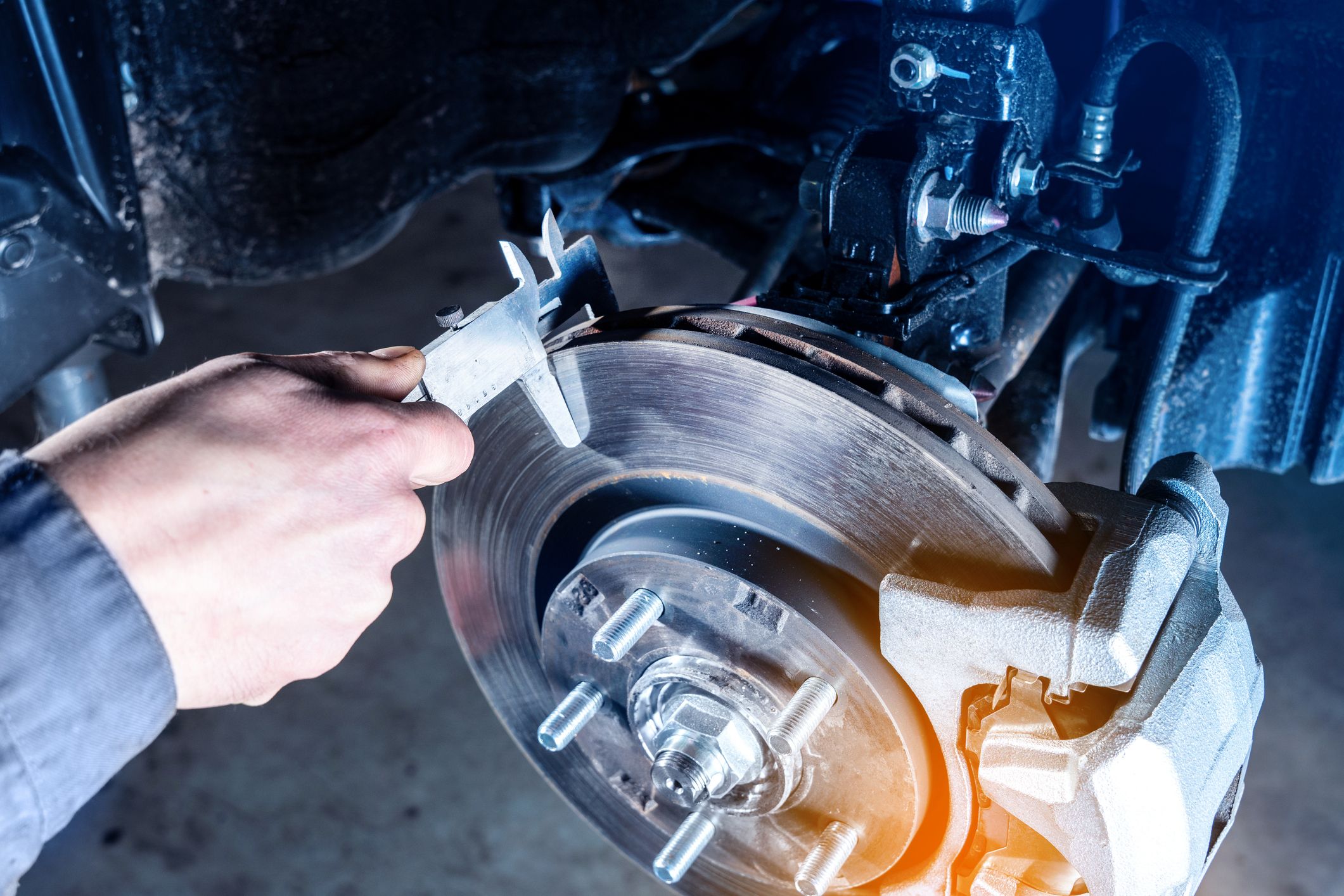
There’s no single solution for fixing a stuck brake caliper because the solution depends on the cause. And while drivers can spot symptoms, diagnosing the root cause requires trained eyes and proper tools. Sometimes, fixing a stuck caliper is a matter of servicing: removing corrosion, freeing up bound hardware, and applying lubrication. Other times, replacement is the best option.
What matters most is that it’s done right. Brake components must be installed precisely, using quality parts that restore proper braking balance. That’s why this job is best left to the pros; guessing at the solution or delaying repairs can lead to uneven brake pad wear, rotor damage, and higher repair costs down the road.
Brake Caliper Sticking? Firestone Complete Auto Care Can Help
If your vehicle pulls while braking, gives off a burning smell, or feels like one wheel is doing more work than the others, a sticking brake caliper could be putting your safety at risk. Learn how Firestone Complete Auto Care evaluates brake issues like uneven wear, overheating, and caliper problems as part of a professional brake inspection, and take advantage of current brake service offers that include a free brake check. Catching brake issues early can help protect your stopping power and prevent more costly repairs down the road.