Coolant doesn’t get much attention when everything is working the way it should. But when your engine starts running hot, it’s the first thing that should be on your radar. Read on to learn everything you need to know about coolant. Here's how to know if you need coolant, when it’s time for a full coolant flush, how to check the system yourself, and more.
Key Takeaways
- Coolant, as the name implies, regulates your engine’s temperature. It also protects the engine and cooling system from damage caused by corrosion and freezing.
- Low coolant levels can trigger dashboard warning lights, a high temperature gauge reading, and engine overheating.
- If your coolant is old, contaminated, discolored, or simply due for service, you may need a coolant exchange instead of a coolant top-off.
- Checking your coolant level is fairly straightforward. Wait for the engine to cool, then check the MIN/MAX marks on the side of your coolant overflow tank. The fluid level should be between those two marks.
- You can have your coolant checked at Firestone Complete Auto Care. We can test your coolant and radiator condition, diagnose leaks, and recommend the right maintenance or repair service before a small problem becomes a major one.
What Is Coolant and Why Do You Need It?
Engine coolant is a mix of antifreeze, corrosion inhibitors, dyes (for easy leak identification), and water. Its main job is to carry heat from your engine through the cooling system, where that heat can be dissipated through your car’s radiator. It also mitigates corrosion in your cooling system and helps prevent the water in that system from freezing, expanding, and cracking your engine block.
It’s worth noting that your vehicle’s cooling system is “closed,” meaning coolant continuously circulates through a sealed loop rather than being used up like fuel. So, while some coolant loss is expected over many years, a properly functioning system shouldn’t mysteriously lose significant amounts.
That’s why low coolant isn’t usually a simple “just add some more” situation. If the level keeps dropping, it’s usually best not to keep driving — there may be a leak or another issue that needs attention. If you keep driving without enough coolant, your vehicle can overheat and sustain serious engine damage.
Coolant Top-Off vs. Coolant Exchange: What’s the Difference?
These two services might sound similar, but they’re not the same thing.
A coolant top-off simply brings a low coolant level back up to where it should be. If the fluid is still in good shape and there’s no ongoing leak, that may be all your vehicle needs. However, it won’t magically revitalize old coolant; that’s what a coolant exchange is for.
A coolant exchange, also called a coolant flush, more completely drains your cooling system, flushes it, and fills it with fresh coolant. This is typically recommended when the existing fluid has reached the end of its life, been contaminated, or reached the manufacturer’s recommended service interval.
How to Know if Your Car Needs Coolant
If your car is low on coolant, you probably won’t have to look too hard to find symptoms. You might notice that:
- Your temperature gauge is running hotter than normal. While it varies from vehicle to vehicle, most engines operate between 195 and 220 degrees Fahrenheit. At 225 degrees or above, your engine may be at risk of overheating (or already is).
- There’s a new warning light lit up on your dashboard. This light usually looks like a thermometer submerged in liquid. On newer vehicles, you may also get a written warning on your digital display.
- The heater isn’t blowing as warm as it normally does. Hot coolant runs through a part called the heater core, which provides the heat for your car’s HVAC system. If there’s too little coolant running through it, your vents won’t pump out heat as well as they normally do.
- There’s coolant pooled underneath your car. It may be obvious, but if you have fluid underneath your car (no matter the kind), it’s not a good sign. Your water pump, hoses, or radiator could be leaking coolant.
- Steam is coming out from under your hood. This one is a clear sign of overheating. As the coolant boils, it releases steam, which can escape from your radiator cap or damaged areas of your cooling system.
- Your engine smells sweet. When coolant overheats, the glycols in antifreeze can vaporize, producing a sweet, almost maple-like smell that has a chemical undertone.
So, what do you do if your car overheats due to low coolant? First things first, don’t remove the radiator cap immediately. To avoid burns, wait for the engine temp to come back down. If you remove the cap too soon, hot, pressurized coolant can spew out of the radiator and onto you. Then, once you’ve pulled off to a safe area, read our article, “Car Overheating? Here's Why, What To Do (& Not Do).”
How to Know If You Need a Coolant Flush
Like everything, coolant doesn’t last forever. As a rule of thumb, you should exchange your coolant when it reaches the manufacturer’s recommended service interval or when an inspection shows it's no longer in good condition. But if you’re already checking your coolant and want to see if an exchange might be in the cards, here’s what you should watch out for:
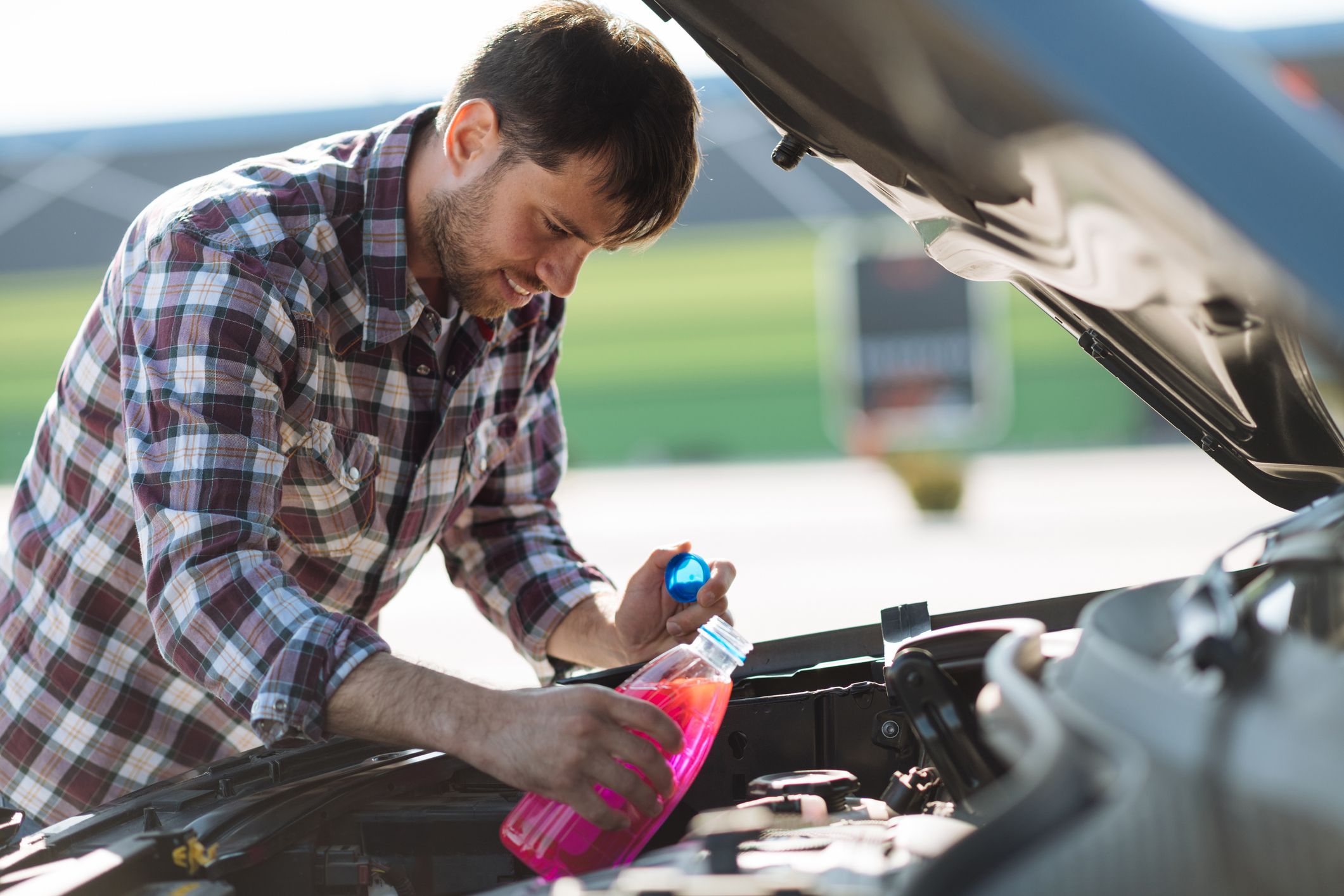
- Coolant that looks dirty, rusty, sludgy, or milky. Good coolant should look brightly colored (yellow, green, orange, and pink are common colors) and fairly transparent — not like a radioactive milkshake.
- Recurring cooling system issues. If overheating, leaking, or a persistent sweet smell has become part of your daily commute, it’s time to have a professional look at your system.
Coolant exchanges aren’t the only flushes we do at Firestone Complete Auto Care. We can also exchange your transmission fluid and clean your fuel system. Read more about why these services matter in our blog post, “Coolant, Transmission Fluid, and Fuel System Cleaning FAQs.”
How to Check Your Coolant Levels
Checking your coolant level is usually a straightforward job. Here’s how to do it:
- Park your vehicle on level ground and let the engine cool completely.
- Open the hood and look for the coolant overflow/expansion reservoir. Your owner’s manual can tell you exactly where it is, but generally, it’s a translucent plastic container near the radiator. It might have a radiator or thermometer icon, or it may simply say “Coolant.”
- Once you’ve identified the coolant reservoir, look for the MIN/MAX or LOW/FULL markings on the side of the reservoir. When the fluid is cool, it should sit between those markings.
- If your coolant level is at or below the “MIN” or “LOW” marking, it’s probably time for a top-off. Follow the directions in the owner’s manual, but this is normally checked and topped off when cold.
Important Notes:
- You can buy coolant in concentrated or pre-mixed forms. Adding concentrated coolant to your system can reduce its effectiveness, so dilute it to the proper ratio (usually 50:50) with water beforehand. Use distilled water to prevent corrosion-causing minerals from building up inside your system. Pre-mixed coolant can be poured in without further dilution.
- It’s imperative that you use the proper type of coolant for your vehicle. Always check your owner’s manual to confirm the coolant type you need, or take your car to a professional for service. Mixing coolant types can turn the coolant into a gelatinous substance that can cause catastrophic clogs in your cooling system.
Keep Your Engine Cool With Firestone Complete Auto Care
Whether your coolant level is low or your cooling system is overdue for service, keeping coolant in good condition is one of the simplest ways to help protect your engine from overheating. Firestone Complete Auto Care offers cooling system inspections, coolant exchanges, and radiator services designed to help maintain proper engine temperature and cooling system performance. Schedule an appointment online and stop by your local Firestone Complete Auto Care today!
Coolant-Related FAQs:
What Tools Do I Need to Change My Coolant?
For a top-off, you usually don’t need any tools, except maybe a funnel to prevent messes. But for a basic coolant replacement, you’ll typically need the proper coolant, a drain pan, basic hand tools, and access to the manufacturer’s service booklet. Safety equipment like gloves and safety glasses is also recommended.
With that said, the exact process and tools vary by vehicle, and improper bleeding can leave air trapped in the system. For that reason, a professional coolant exchange is usually the safer choice.
Where Should Your Coolant Level Be When Cold
With the engine cold, the coolant level should generally be between the LOW/FULL or MIN/MAX marks on the coolant reservoir. It’s always a good idea to check your owner’s manual for vehicle-specific guidance.
When Are Coolant Levels Too High?
Coolant shouldn’t be filled above the maximum mark when the engine is cold. The fluid expands as it heats up, so overfilling can create unnecessary pressure and cause coolant to spew out of the reservoir.
How Much Does a Coolant Replacement Cost?
Coolant exchanges typically don’t cost more than $200. However, the cost varies depending on the type and quantity of coolant required, as well as whether additional repairs are needed. If testing reveals a leak, radiator problem, or a failing component, those issues can affect the total cost. A professional inspection can provide a better estimate than guessing based on fluid volume and condition alone.
Where Should I Get Coolant Replacement Services?
Firestone Complete Auto Care can inspect your cooling system, evaluate coolant condition, perform coolant exchanges and radiator services, and diagnose leaks when the problem calls for more than a top-off.
--
Article Development Supported & Reviewed By:
Firestone Complete Auto Care’s Technical Operations Team
The Firestone Complete Auto Care’s Technical Operations Team is composed of ASE certified technicians with over 70 years of combined experience. ASE certification represents the highest standard of technical training in the automotive industry. Guided by Firestone Complete Auto Care’s rigorous editorial standards, our team delivers timely, detailed, and practical resources drivers can trust to keep their vehicles running newer, longer.