Your car’s differential probably isn’t something you think about on your daily commute. But it plays a critical role in allowing your car to turn smoothly through every curve and corner on your drive. Similarly, your car’s differential fluid plays a critical role in keeping all the gears inside your differential operating smoothly.
In this article, we’ll cover everything you need to know about differentials, including what a car differential and differential fluid are and how to check these fluid levels in your vehicle.
Key Takeaways
- Differential fluid lubricates the gears inside the differential, a complex gear assembly on the drivetrain that allows wheels to rotate at different speeds during turns.
- Driving with old or contaminated differential fluid can cause gear damage, affecting vehicle handling and potentially leading to costly repairs.
- How often should differential fluid be changed? For optimal performance, differential fluid should be changed about every 30,000 to 60,000 miles, depending on your make, model, and driving conditions. However, exact intervals vary by manufacturer, so consult your owner's manual for specific mileage recommendations.
What Is a Car Differential?
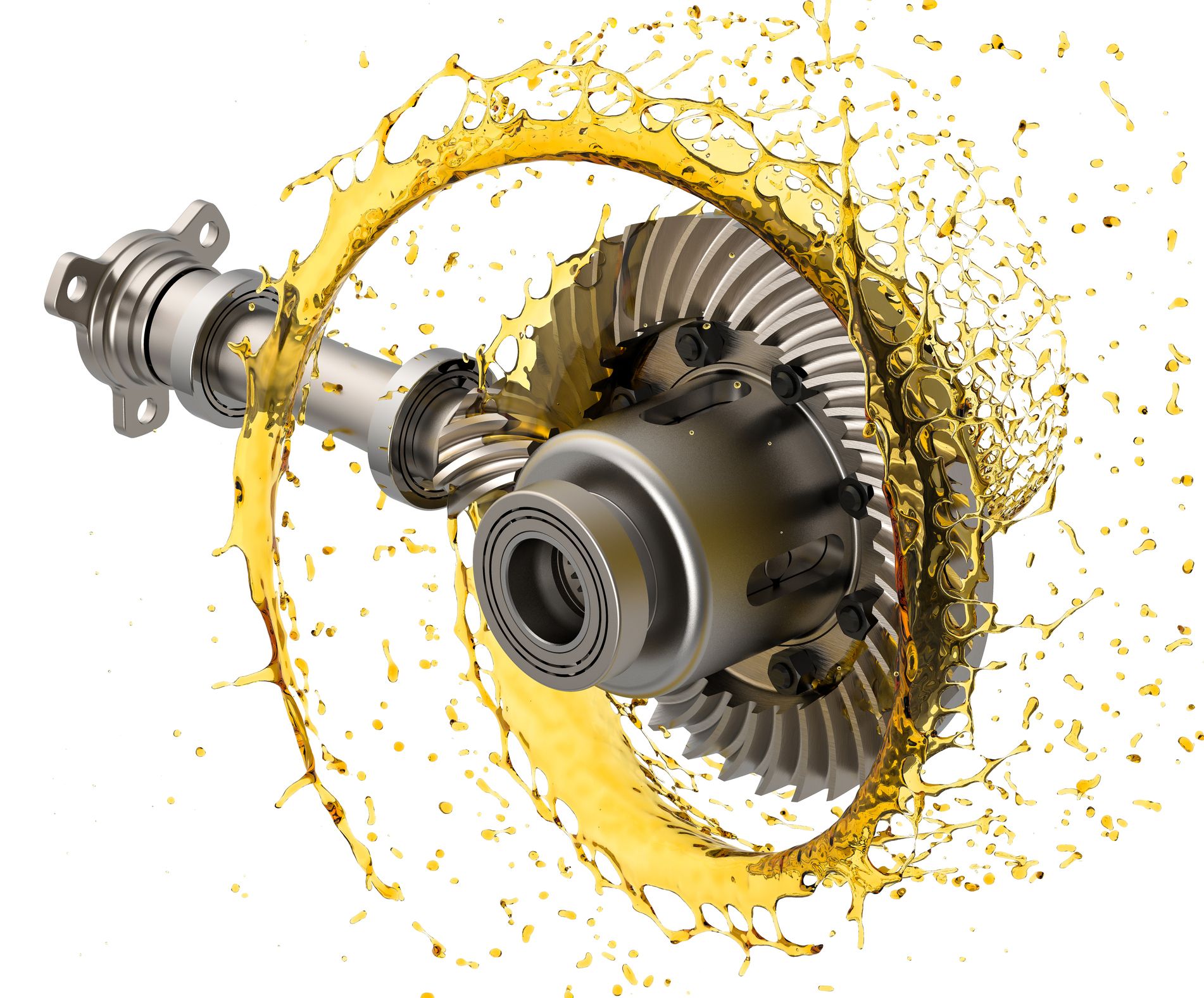
A car differential is a drivetrain component that helps deliver power from the engine to the wheels while allowing them to spin at different speeds. This is especially important when turning, as the outside wheel needs to travel farther than the inside wheel in the same amount of time, and therefore, must rotate faster to keep up. Without a differential, your tires could drag, hop, or slip because both wheels would be forced to rotate at the same speed, even though they’re traveling different distances.
Front vs. Rear Differentials
The location of your differential depends on the drivetrain of your vehicle’s make and model. Rear-wheel drive vehicles have a rear differential located on the rear axle shaft, while four-wheel drive and all-wheel drive vehicles have both a front differential and a rear differential to distribute power to all four wheels.
On most front-wheel-drive vehicles, the front differential is built into the transmission and operates as a single unit called a transaxle. It’s important to note that most transaxles do not take differential fluid. Instead, the transaxle’s differential typically shares the same automatic transmission fluid (ATF) that the transmission uses.
Types of Differentials
To understand what kind of fluid your differential needs, you also need to know the type of differential your vehicle has. Here’s a quick breakdown of the most common types:
- Open Differentials: Most commonly found on everyday commuter cars like sedans, crossovers, minivans, etc. Open differentials allow wheels to rotate at different speeds, but may send power to the wheel with the least traction.
- Limited-Slip Differentials: Common on more performance-oriented vehicles. These help reduce wheel slip by sending equal power to both wheels unless the vehicle is turning left or right
- Locking Differentials: Common on trucks and off-road vehicles. Locking differentials can lock both wheels on an axle together for extra traction.
- Torque-Vectoring Differentials: A more advanced differential system found on high-end vehicles. These differentials can fine-tune the torque sent to each wheel for better handling and stability.
What Is Differential Fluid in a Car?
Differential fluid, also known as gear oil, is the lubricant that coats the gears and other internal parts of a differential. Similar to motor oil, differential fluid is designed to reduce friction, control heat, and protect against wear between interlocking gears. Unlike motor oil, however, differential fluid tends to be thicker and has special additives to better handle heavy loads and high pressure in the drivetrain.
Types of Differential Fluid
Differential fluids can vary significantly by formula and oil weight. You’ll want to consider a few factors to make sure you’re using the correct one:
- Base formula: Some fluids are mineral-based, while others are synthetic. Synthetic fluids are often designed to perform well across a wider range of temperatures and driving conditions.
- SAE viscosity rating: The viscosity rating is a measure of a differential fluid’s viscosity across a range of temperatures. Common ratings like 75W-90 and 80W-140 describe how well the gear oil flows at both cold and hot operating temperatures.
- Differential-specific design: Vehicle manufacturers also specify the performance or quality requirements for the gear oil. A very common specification for rear axles is GL-5, but the manufacturer may require a different specification. Vehicles with limited-slip differentials typically need special additives in their differential fluid to handle friction between internal clutches. Always follow the vehicle manufacturer's viscosity and performance specifications.
Because requirements vary, always check your owner’s manual to confirm the specific type of differential fluid your vehicle needs before servicing.
Does Differential Fluid Need to Be Changed?
Yes, differential fluid does need to be changed over time. While some vehicles may go longer between services than others, more severe driving conditions like regular towing, hauling, off-roading, and frequent stop-and-go driving may wear out differential fluid sooner and require more frequent servicing. Though it doesn’t need to be changed as often, differential fluid is just as important as engine oil, and having it replaced regularly can help prevent expensive repairs.
What is a Differential Fluid Change?
During this service, the old gear oil is drained from the differential housing and replaced with fresh fluid designed for your specific drivetrain. This helps restore proper lubrication and protect the gears from excess friction and heat.
Whether you just need a rear-end differential fluid change or both a front and rear differential fluid change, the pros at Firestone Complete Auto Care can help. We’ll inspect your drivetrain and fluid levels, and recommend maintenance based on your vehicle, mileage, and driving habits.
Symptoms of Low Differential Fluid
Because the differential transfers power smoothly to your wheels, low or worn differential fluid can quickly affect how your vehicle drives and sounds. Many differential low-fluid symptoms start subtly but can worsen over time if left untreated. So, this is a service you definitely don't want to neglect.
Here are some of the most common warning signs to watch for:
Whining Noises
A whining or howling sound from the front or rear of the vehicle can happen when the gears are not getting enough lubrication. The noise may get louder when accelerating, slowing down, or driving at certain speeds.
Grinding or Clunking Sounds
Grinding or clunking sounds while turning may indicate low fluid, worn parts, or thin fluid that is no longer adequately protecting the differential. Since other drivetrain issues can sound similar, it’s best to have the vehicle inspected.
Vibrations or Shuddering
If your vehicle vibrates, shudders, or otherwise feels rough during acceleration or turns, degraded differential fluid is one possible cause. This can be more noticeable in vehicles with limited-slip differentials.
Difficulty Turning
If your vehicle feels like it is binding, hopping, or resisting smooth turns, the gears in the differential may not be connecting smoothly due to old differential fluid. This often shows up during tight turns, parking maneuvers, and low-speed driving.
Burning Smell
A burning smell near the differential may mean the gear oil is overheating or breaking down. Old, burnt differential fluid has a particularly foul smell and should be replaced immediately to prevent further damage to the differential gears.
How to Check the Differential Fluid Level in Your Vehicle
For experienced DIY-ers, checking your differential’s fluid level is fairly simple, but it does require safely raising your vehicle on jacks to access the differential housing. From there, it’s a matter of removing the fill plug (not the lower drain plug), and using a finger or paper towel to assess the quality and level of the oil. Differential fluid should be filled right up to the threads of the fill plug. Fluid that looks gritty, milky, or burnt will likely need to be replaced.
If you’d rather avoid the hassle of jacking up your car and dealing with messy, pungent gear oil, just ask a Firestone Complete Auto Care technician to take a look at your next oil change. Our technicians can raise your car, visually inspect the fluid’s appearance, and recommend the appropriate differential fluid for your vehicle if a change is necessary.
Keeping up with regular differential fluid changes is a simple way to help protect your drivetrain and keep your vehicle performing at its best for the road ahead.
Get Drivetrain Maintenance at Firestone Complete Auto Care
Differential fluid helps protect gears that transfer power to your wheels, and maintaining proper fluid condition supports smooth turning and consistent drivetrain performance. Firestone Complete Auto Care offers differential fluid exchange services as part of routine drivetrain maintenance. Technicians can check fluid condition, replace worn fluid, and help ensure gears remain properly lubricated for reliable operation.
--
Article Development Supported & Reviewed By:
Firestone Complete Auto Care’s Technical Operations Team
The Firestone Complete Auto Care’s Technical Operations Team is composed of ASE certified technicians with over 70 years of combined experience. ASE certification represents the highest standard of technical training in the automotive industry. Guided by Firestone Complete Auto Care’s rigorous editorial standards, our team delivers timely, detailed, and practical resources drivers can trust to keep their vehicles running newer, longer.