If you’ve ever found yourself captivated by the sound of a finely tuned engine, fascinated by what makes cars run, or eager to help people get safely back on the road, you might be wondering how to turn that passion into a career.
Becoming an automotive technician opens doors to a rewarding, stable career where your skills are in demand across the country. At Firestone Complete Auto Care, we know this road well, and our goal is to help aspiring technicians not just find a job, but build a fruitful future.
Let’s break down what an automotive technician does, the steps to enter the field, and the certifications that can launch your career to the next level.
What Does an Automotive Technician Do?
An automotive technician (sometimes called a mechanic) is an expert who keeps vehicles running reliably. On a typical day, a technician might use computerized diagnostic equipment to identify problems, perform hands-on repairs or replace faulty parts, and handle routine maintenance services like oil changes or brake inspections.
Automotive technicians also interact with customers, explaining vehicle issues in plain language and advising on necessary repairs or maintenance. These professionals combine problem-solving savvy with technical skill and customer service.
Ultimately, a technician’s role includes:
- Diagnostics: Using advanced tools and software to pinpoint issues, from electrical faults to engine performance problems.
- Repairs and Maintenance: Everything from oil changes and brake replacements to repairing transmissions or installing new tires.
- Customer Communication: Explaining complex vehicle issues in clear, everyday language so customers understand their options.
- Continuous Learning: Staying up to date on the latest automotive technologies, from hybrid drivetrains to driver-assistance systems.
In short, technicians are problem-solvers, educators, and trusted advisors. They keep cars safe, reliable, and efficient—a responsibility that makes this career both challenging and deeply rewarding.
Steps to Becoming an Automotive Technician
Becoming a certified automotive technician doesn't happen overnight, but the path is clear and very attainable. Here are the typical steps for starting a career as an auto technician:
Step 1: Get Your High School Diploma or GED
The starting line is finishing high school or earning a GED. Courses in math, science, and especially automotive technology (if offered) are helpful. Many future technicians also tinker with cars in their own garages, but structured education lays the foundation for long-term success.
Step 2: Get the Right Training
After finishing high school or earning a GED, the next step is learning the trade. While you don't NEED vocational school or an associate’s degree to work in a shop or to qualify for ASE certification, training programs can give you a big head start.
Vocational schools, community colleges, and technical programs often offer courses that are ASE-accredited, which means the training is held to the same standards you’ll later be tested on. These programs typically combine classroom lessons with shop time, so you’re not just reading about engines—you’re taking them apart and putting them back together too.
Step 3: Hands-On Training
Books and lectures matter, but nothing replaces getting under the hood. Apprenticeships, internships, or entry-level shop positions are where students learn how to apply classroom knowledge in real-world conditions.
At Firestone Complete Auto Care, technicians gain this experience in a supportive environment. With mentorship from seasoned professionals and structured pathways for skill-building, you learn how to fix cars right the first time.
Step 4: Get ASE Certified: Your Career Accelerator
Once you’ve gained some foundational knowledge and hands-on experience, your next question is likely, "What certification do I need to become an automotive technician?"
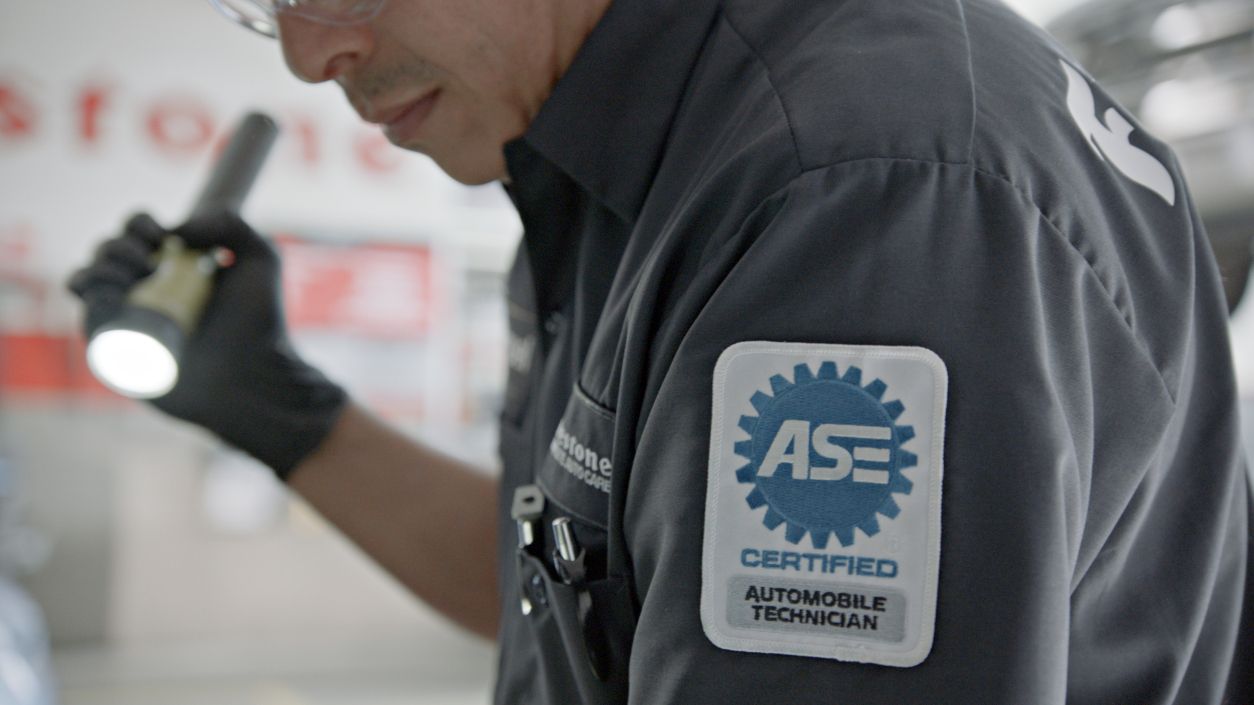
The gold standard is ASE Certification from the National Institute for Automotive Service Excellence. ASE sets the benchmark for technical competence in the automotive industry. Earning certification requires one to three years of work experience in a shop (some schooling can count toward this) and the ability to pass a computer-based test in the system you’re certifying for, like brakes, electrical, or engines.
Through ASE, technicians can certify in areas like:
- Engine repair
- Electrical/electronic systems
- Brake Systems
- Heating and air conditioning
- Suspension and steering
Earning multiple certifications can lead to becoming an ASE Master Technician, one of the most respected titles in the field.
Qualified employers—like Firestone Complete Auto Care—look for ASE credentials because they signify skill, professionalism, and commitment. Customers also feel reassured knowing their vehicle is in the hands of ASE-certified experts.
How Firestone Raises the Bar with ASE Accreditation
While ASE usually accredits schools and training programs, Firestone Complete Auto Care is one of the few companies in the industry with its own ASE-accredited training program. That means when you join our team, your training isn’t just “in-house”—it’s been officially recognized by ASE for meeting national standards in curriculum, facilities, instructor qualifications, and outcomes.
This distinction signals:
- Quality: You’re learning skills that match the best vocational schools.
- Credibility: You’re building credentials that carry weight everywhere in the industry.
- Opportunity: ASE accreditation gives you a competitive edge and sets you up for faster career growth.
Many competitors can’t make the same claim. That makes Firestone a premier destination for anyone serious about a career in automotive service.
Step 5: Check for State or Local Licensing
In some states, you may need a license or special permit to do certain kinds of work. Not every technician needs one, but it’s worth checking before you start.
- Emissions and Safety Inspections: A handful of states require techs to hold a license if they perform state inspections.
- Air Conditioning Repairs: Federal law requires an EPA Section 609 certification to work on vehicle A/C systems.
- Other Local Rules: Some areas may have additional requirements for specific repair shops or specialties.
If you’re not sure, the best next step is to check your state’s Department of Motor Vehicles (DMV) or local regulatory agency. Schools and employers, like Firestone Complete Auto Care, can also guide you through the process if a license is required in your area.
Step 6: Building Your Career Path
So, you’ve completed training and earned your certifications. What’s next? A career as an automotive technician can branch into several directions:
- Entry-Level Technician: Focus on routine services like oil changes, battery replacements, and tire maintenance.
- Skilled Technician: Handle diagnostics, advanced repairs, and specific system specialties.
- Master Technician: Achieve multiple ASE certifications and take on leadership in complex repairs.
- Lead Technician or Service Manager: Transition into leadership roles, guiding teams and ensuring quality service.
- Specialist Paths: Focus on areas like hybrid/electric vehicles, performance tuning, or fleet maintenance.
- Technical Trainer: Teaching and mentoring the next generation of technicians through Firestone’s ASE-accredited training program.
At Firestone, we’ve designed career paths that allow technicians to grow within the company. With continuous learning opportunities, professional development, and access to our ASE-accredited program, teammates can move from C-Techs (entry-level) all the way to Master Technicians and beyond.
How Long Does It Take to Become an Automotive Technician?
Programs can range from as little as six months for certificate courses to about two years for associate degrees. The timeline depends on how specialized the program is and whether you attend full- or part-time.
Ultimately, the answer depends on your route:
- Certificate programs: About 6–12 months.
- Associate degrees: Roughly 2 years.
- Work experience + certification prep: This is ongoing, but ASE requires at least 1–2 years of work experience for certain certifications.
That means in as little as a year, you could begin working in the field while continuing to grow and specialize.
Why Choose Firestone Complete Auto Care?
At Firestone Complete Auto Care, being a technician isn’t just a job. It’s a career. Here’s what sets us apart:
- ASE-Accredited Training Program: A rare distinction that means your education meets the industry’s highest standards.
- Earn While You Learn: Get hands-on experience while you build your skills and credentials.
- Certification Support: We actively help teammates pursue ASE certifications with training, study resources, and career incentives. We also pay for test and registration fees for certain ASE certifications.
- Growth and Stability: Firestone is part of the Bridgestone family, one of the most respected names in tires and automotive care, giving you long-term security.
- Culture of Excellence: Our “fix it right the first time” mindset ensures you’ll always be supported in doing quality work that builds customer trust.
Start a Career with Purpose at Firestone Complete Auto Care
Learning how to become a car mechanic is about discovering a career where your skills make a tangible difference in people’s lives. Every time you solve a tricky diagnosis, replace a failing brake system, or reassure a customer that their car is safe, you’re restoring peace of mind. And with the support of Firestone Complete Auto Care’s ASE-accredited training, you’ll always have the tools, knowledge, and opportunities to keep growing.
If you’re passionate about cars and want to turn that passion into a career, Firestone Complete Auto Care can help you get there. With a hands-on ASE-accredited training program, certification opportunities, and room to grow, we’ll support you every step of the way. Start your journey today by texting "JOBS" to 27854 to apply or exploring career opportunities with Firestone Complete Auto Care.